In 2016, researchers pooled data from 45 studies in the BMJ and found that people who ate more whole grains had a lower risk of dying early. Eating roughly 90 grams a day, about three servings, was linked to around 17% lower all-cause mortality. That is an association, not a guarantee. But the pattern was striking, and it pointed at one thing: the grain on your plate matters, and how much of it was stripped away matters even more.
Now think about what most Indian kitchens actually cook with. Maida in the naan. Polished rice in the batter. Refined flour in the biscuit. Whole grains, whole in name only.
Millets are the grain that never left. And millet meal, whole millet in an easy, ready form, is the simplest way to bring them back. Here is how it compares with the flours already in your cupboard.
At The Divine Foods, we craft both whole unrefined millet meals and stone-ground millet flours-giving you full control over your metabolic health, gut microbiome, and daily cooking.
Millet Meal vs Other Flours: The Quick Answer
Millet meal is made from whole millet grain, so it keeps its fibre and minerals. Maida and rice flour are usually refined and low in fibre. Whole wheat and oat flour are also whole grains but are not naturally gluten-free. Millets are, and they bring minerals like calcium and iron that polished grains lack.
Millet Meal vs Maida (Refined Flour)
Maida is wheat with the bran and germ milled away, leaving mostly starch. It is soft, white and easy to bake with, and it is also the least nutritious grain product in your kitchen. Millet meal keeps the grain intact, so you get more fibre, more minerals and a slower, steadier meal. If you change one thing, change this.
Millet Meal vs Whole Wheat Atta
Atta is a fair, honest whole grain, and nobody needs to quit it. The difference is gluten. Wheat contains it, millets do not, which matters if you avoid gluten. Millets also add variety: switching grains across the week widens the range of nutrients you eat. Finger millet, for example, is known for its calcium, well above what you find in wheat or polished rice.
Millet Meal vs Rice Flour
Most rice flour comes from polished rice, so the fibre is largely gone. It makes lovely idiyappam and murukku, but it is more of a texture ingredient than a nourishing one. Millet meal gives you comparable softness in porridge and batters with far more substance.
Millet Meal vs Oat Flour
Oats are a genuine whole grain with a great reputation for good reason. But they are not native to India, they are often processed alongside wheat, and they can carry gluten traces. Millets are home-grown, traditional and naturally gluten-free. Think of oats as a fine neighbour and millets as family.
The Problem With "Switching to Millets"
It sounds easy. Then life happens. Millets need soaking, grinding, balancing and time. Most people try once and quietly go back to what is fast.
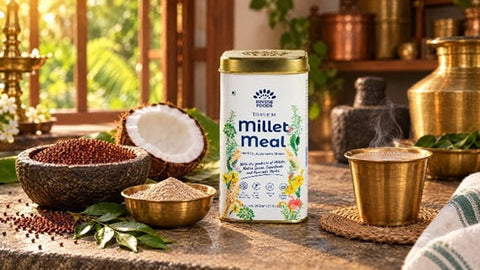
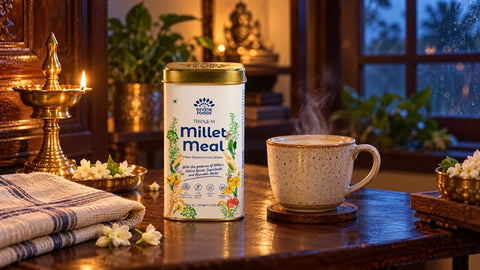
That is the gap Triple-M Millet Meal Replacement Shake from The Divine Foods fills. It is an instant millet mix made with native millets from Tamil Nadu, blended with pepper, cardamom, hibiscus and ashwagandha, with no added sugar, and free from additives, artificial colours, flavours and preservatives. There is nothing to soak. Stir the powder into warm or cold milk, or blend it into a smoothie, and your whole grain is done in a minute.
How to Use It
- Quick breakfast: Stir 2 to 3 tablespoons into warm milk.
- Chilled shake: Shake or blend with cold milk and ice.
- Smoothie base: Blend with banana and dates for natural sweetness.
Make the Right Switch for Your Metabolism Today
Whether you choose the slow-burning power of whole millet meal or the versatile ease of millet flour, replacing refined grains with ancestral superfoods is one of the most effective steps you can take for long-term health.
Bring pure, unadulterated traditional nutrition back to your table.