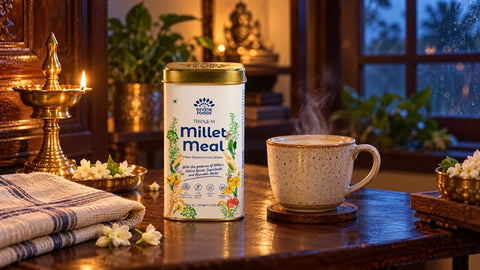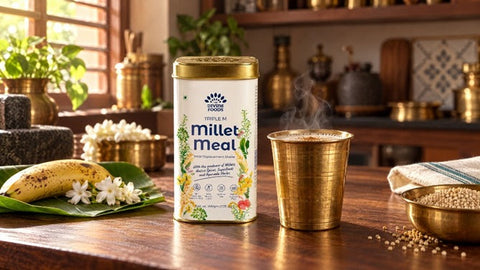
Millet meal is whole millet ground to a coarse, grainy texture: an ancient, naturally gluten-free base for porridge, upma, dosa and rotis. Here is what it is, how it differs from flour, and how to cook it like you have done it for years.
Long before wheat had a supermarket aisle, a tiny seed was feeding farmers across Asia and Africa. Archaeologists have found evidence of millet farming in northern China dating back more than 8,000 years, which makes it one of the oldest cultivated crops on Earth.
It survived because it is tough. Millets grow in poor soil and need only a fraction of the water that rice demands. That resilience is why the United Nations declared 2023 the International Year of Millets, a campaign India proposed and led.
Today, that old seed is back in the kitchen in a very practical form: millet meal. If you have seen the term and wondered what it actually means, this guide is for you.
What Is Millet Meal?
Millet meal is whole millet ground into a coarse, grainy texture. It sits between the whole grain and fine flour. Think of it as the millet version of rava or sooji: pale gold, slightly gritty, and ready to turn into a hot, filling dish in minutes.
Because it is usually ground from the whole grain, millet meal keeps the fibre and minerals found in the bran. That is the main reason people choose it over refined options.
Health Benefits of Eating Millet Meals
Integrating millet meals into your daily routine offers remarkable, clinically supported health transformations:
1. Reverses Insulin Resistance & Manages Diabetes
Millets have a significantly lower glycemic index compared to white rice. The complex carbohydrate matrix, rich in non-starch polysaccharides, slows down enzymatic breakdown in the small intestine, preventing post-meal blood sugar surges.
2. Deep Gut Healing & Microbiome Diversity
Millets contain high amounts of insoluble fiber and resistant starch, which act as prebiotics. These fibers nourish beneficial gut microflora (Bifidobacteria), generating Short-Chain Fatty Acids (SCFAs) like butyrate that repair the intestinal mucosa and prevent leaky gut syndrome.
3. Naturally Gluten-Free Digestibility
For individuals suffering from non-celiac gluten sensitivity, bloating, or IBS, millet meals provide a completely gluten-free staple that is gentle on the stomach lining and easy to assimilate.
4. Dense Mineral Payload: Calcium, Iron & Magnesium
Finger millet (Ragi) contains up to 344 mg of calcium per 100g-over three times the calcium found in cow's milk. Meanwhile, Foxtail and Pearl millets are loaded with bioavailable iron, magnesium, and B-vitamins essential for red blood cell synthesis and metabolic energy.
How to Cook Millet Meal
Dosa and idli - Replace up to half the rice in your usual batter with millet meal. Soak it well and ferment as usual for a nuttier, chewier result.
Who Should Be Careful?
If you manage blood sugar, have a thyroid condition, or need to avoid gluten strictly, talk to your doctor or a dietitian before making millets a daily staple. Introduce them gradually, as the extra fibre can take your gut a few days to settle with.