
Super Breakfast
Start your day with the native millets that powered South Indian kitchens long before packaged cereals arrived. Our super breakfast collection features little millet, foxtail, kodo and ragi based mixes, naturally rich in fibre and ideal for weight management and steady energy. These ancient grains are lower on the glycemic index than refined wheat or rice, making them a smart choice for diabetic friendly and weight conscious diets. Everything here is sourced from Tamil Nadu farmers and made without refined sugar or artificial additives. Whether you are wondering which millet is good for weight loss or simply want a wholesome morning meal, our millet breakfast range makes healthy eating effortless. Explore the collection and rediscover native grains.




- Featured
- Most relevant
- Best selling
- Alphabetically, A-Z
- Alphabetically, Z-A
- Price, low to high
- Price, high to low
- Date, old to new
- Date, new to old
From Tamil Nadu Farms to Your Kitchen
Native Millets for a South Indian Breakfast
Native Millets for the Morning Meal
Before rice and wheat took over Tamil Nadu kitchens, breakfast ran on millets. Varagu, samai, thinai, kezhvaragu, each grown locally and each with a slower glycemic response than what replaced them. This collection brings those grains back into the morning meal in formats that fit a working day, mostly ready mixes and shakes rather than grains that need soaking overnight.
Millet Names, Since They Cause Confusion
The naming is genuinely confusing across languages, which is why people search for translations more than they search for the grains themselves. Kezhvaragu in Tamil is ragi or finger millet in English and nachni in Hindi. Varagu is kodo millet. Samai is little millet. Thinai is foxtail millet. Kambu is pearl millet, sajjalu in Telugu. Cholam is sorghum or jowar. If you grew up with the Tamil name and are trying to buy under an English label, that list covers most of the confusion.
What Is in the Collection
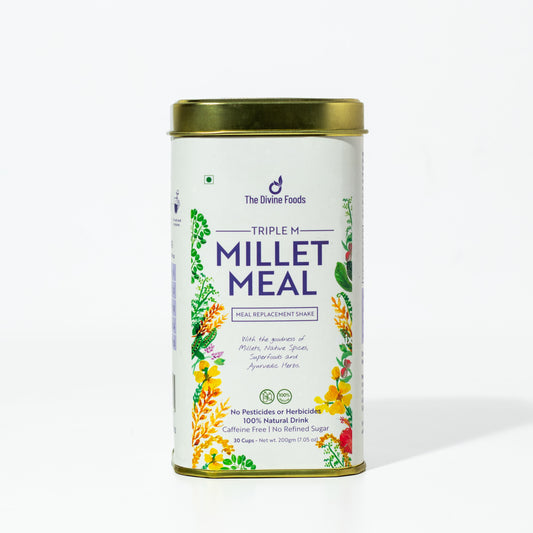
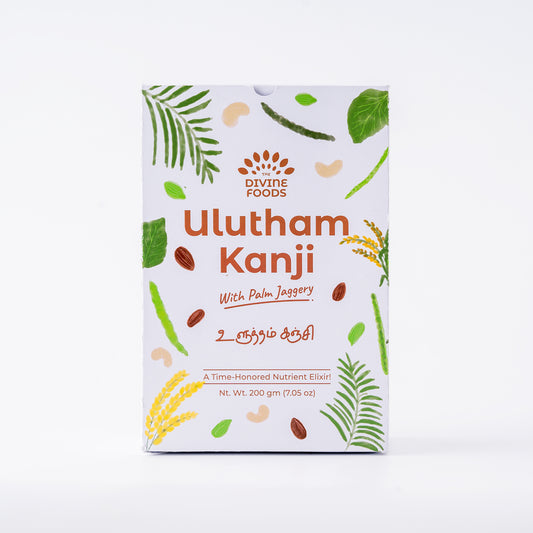
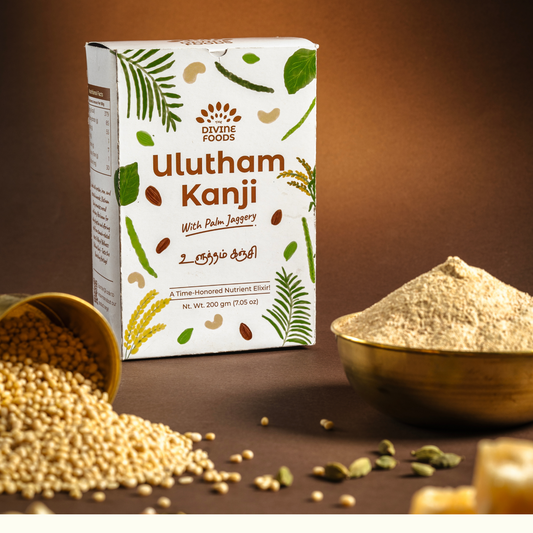
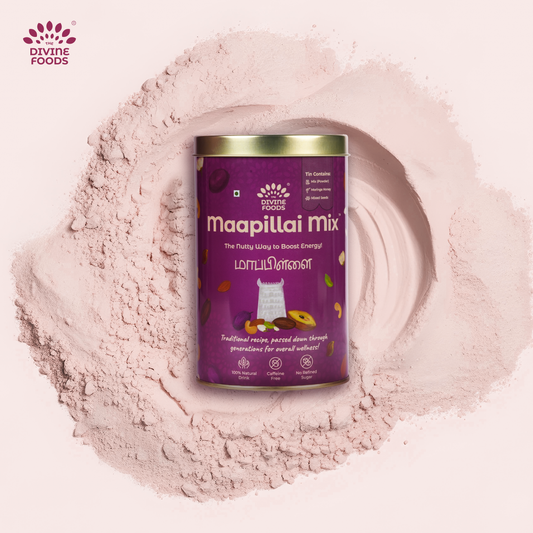
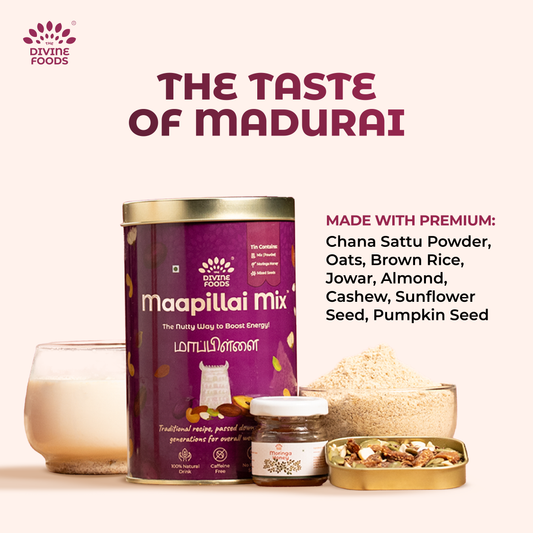
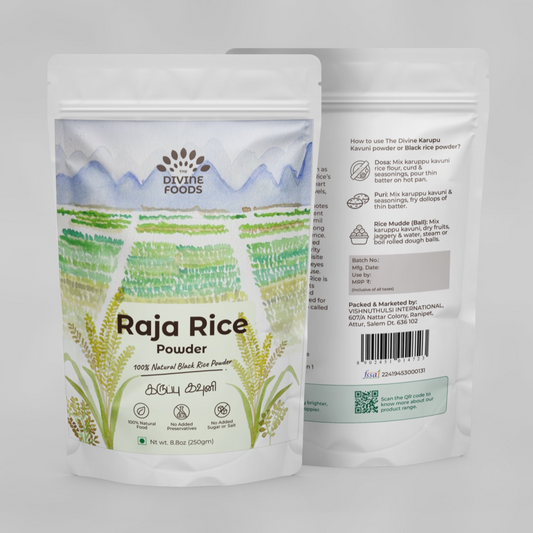
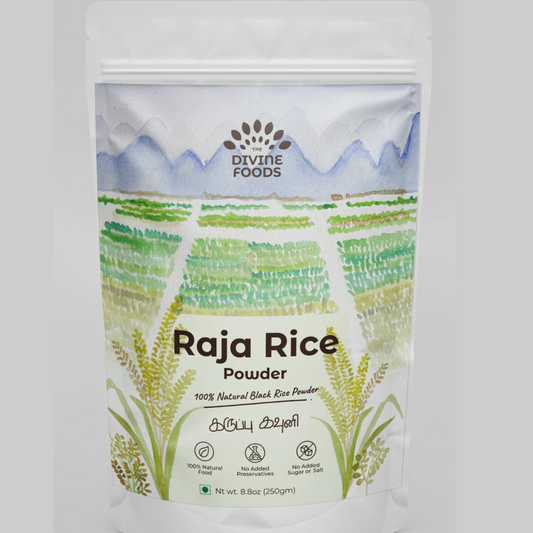
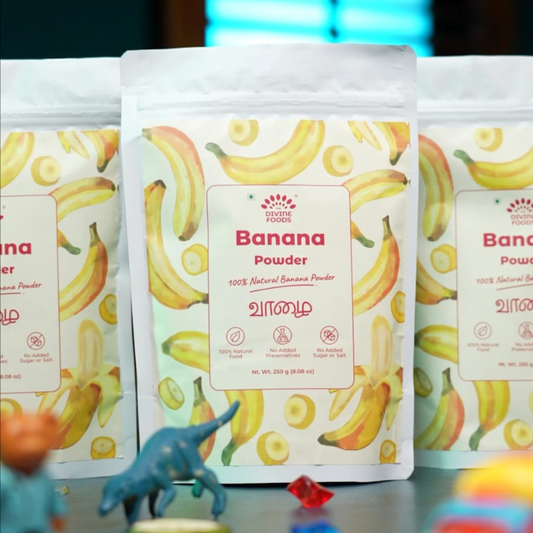
Triple M Millet Milk meal replacement shake is the main product, a blend of native millets designed to work as a full breakfast rather than a supplement to one. Raja Rice Porridge covers the traditional kanji format. Madurai Maapillai Mix is the multi grain and pulse blend traditionally given for strength. Ulutham Kanji, made with urad dal, covers the recovery and bone health side. Raw banana flour and jackfruit powder from Panruti work as low glycemic additions to dosa and roti batter.
Sourced from Tamil Nadu Growers
Millets and pulses are bought from Tamil Nadu growers and stone ground rather than industrially milled, which keeps texture closer to home preparation and avoids the heat that flour mills generate. Small batch grinding means the flour is not sitting for months losing quality. Nothing carries refined sugar, artificial flavour, colour or preservative. Where sweetness is needed it comes from palm jaggery sourced in Tuticorin rather than from white sugar.
Making the Switch at Breakfast
The practical barrier to millets is time, since traditional preparation involves soaking and long cooking. The mixes here solve that, most are ready in the time it takes to boil milk or water. Replace rather than supplement, a millet shake instead of your usual breakfast rather than alongside it. Expect the first week to feel less filling by habit even though millets keep you full longer, which is a taste and expectation adjustment rather than a nutritional one.
Related Collections and Reading
Weight Management groups the low glycemic products. Native Milk Mixes covers the traditional drinks. Powdered Superfoods covers jackfruit powder and raw banana flour. Daily Diet covers the wider staple swaps. On the blog we have written on which millet is best for weight loss, available in Tamil, and on choosing coconut and palm sugar over white sugar. Our team in Salem can suggest which mix suits your morning routine.
Cooking Times and Texture
Millet preparations behave differently from rice and wheat and the main adjustment is liquid. Millet flours absorb more, so a batter that looks right initially will thicken as it sits and needs loosening before the second dosa. Kanji and porridge preparations need five to ten minutes on a low flame with regular stirring, and they continue thickening off the heat. The meal replacement shake is the exception, dissolving into hot or cold milk in under a minute. If a millet porridge turns lumpy, it went in too fast, make a paste with cold liquid first and then add the hot.
Frequently Asked Questions
Question: What is kezhvaragu in English?
Answer: Ragi, also called finger millet, and nachni in Hindi. It is the most widely used millet in South Indian cooking.
Question: Which millet has the lowest glycemic index?
Answer: Kodo millet, varagu in Tamil, and little millet, samai, both sit low. Ragi is higher than those but still well below white rice.
Question: Are millets suitable for children?
Answer: Yes, and ragi in particular is a traditional weaning food across South India. Raja Rice Porridge and the ragi based products suit children well.
Question: Do millets need soaking?
Answer: Whole millets do, usually six to eight hours. The mixes in this collection are ground and prepared so they do not, which is the main reason they get used on a weekday.